
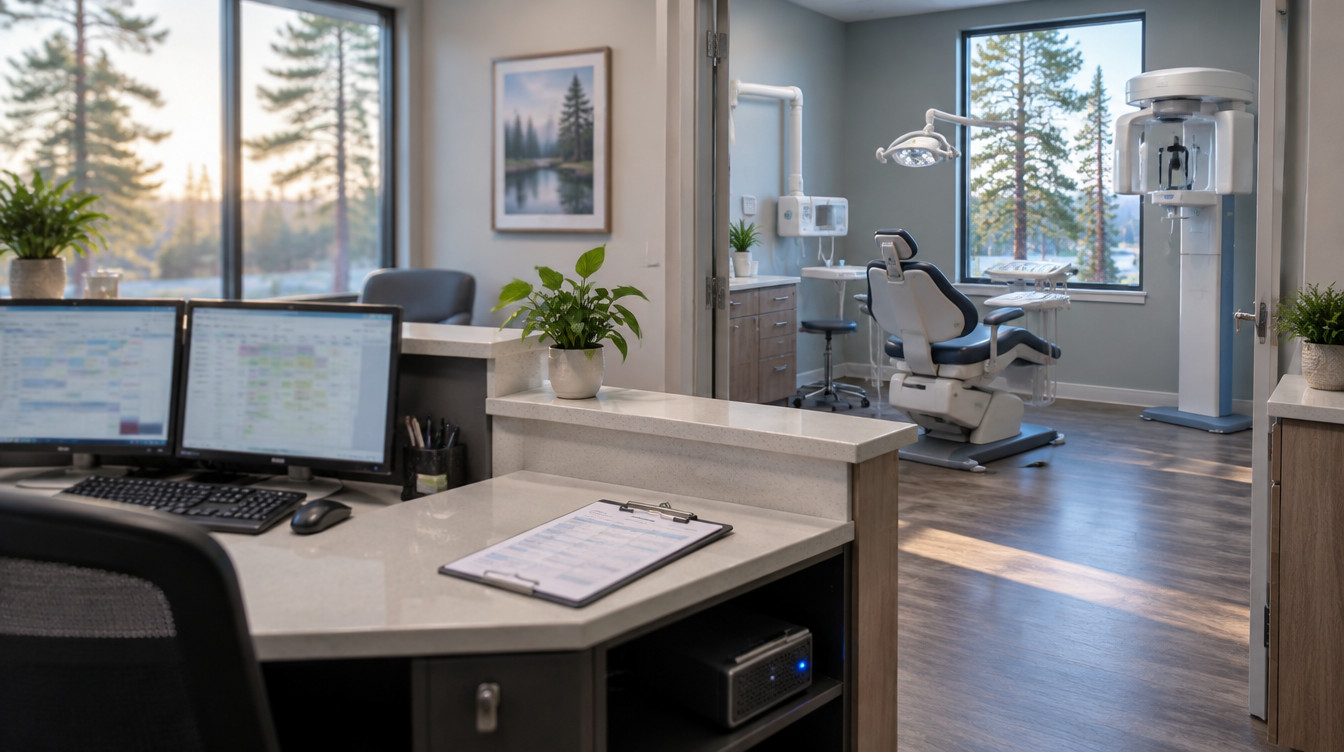
When a multi-location dental group shows up on a ransomware leak-site tracker, every practice owner feels the same pressure: practice-management and imaging systems, patient scheduling, insurance claims and billing, consent forms, and the vendor remote-access paths that keep chairs running across several offices. Public aggregators indexed O2 Dental Group as a claimed victim of the Interlock ransomware group around October 5, 2026.
Ransomware.live lists discovery around 2026-10-05 15:01 UTC (country US; activity Healthcare). The listed domain, o2smiles.com, redirects to o2dentalgroup.com (HTTP 200 at publish research), where O2 Dental Group describes comprehensive and implant dentistry across North Carolina locations including Durham, Fayetteville, Raleigh, Siler City, Southern Pines, and Wilmington. The actor's post makes sweeping claims about patient records and billing documents; those are the attacker's words, not verified facts. As of our sources, we have no confirmed company disclosure and no confirmed encryption, patient-data theft, office closures, or ransom payment, so we treat the Interlock listing as a leak-site / tracker claim only.
For dental and medical practices across Georgia, Tennessee, Alabama, and New York, the useful lesson is identity hygiene plus tested backups of the practice-management database and imaging, not repeating an attacker's accusations about a practice that has not confirmed anything.
What trackers report, and what they do not
Public facts from aggregators: O2 Dental Group; Interlock claim; discovery ~Oct. 5, 2026; U.S. healthcare listing tied to o2smiles.com. Aggregators republish the actor's listing; that is not a verified inventory of patient charts, X-rays, insurance files, or consent forms. We do not have a company-confirmed encryption event, a confirmed exposure of protected health information, a state or federal breach notice, cancelled appointments, or a payment. Do not invent those details from silence, and do not treat an extortion post's HIPAA language as a finding.
Multi-office dental groups share a familiar pattern: a practice-management system (often cloud-hosted or on a server in one office), imaging and intraoral-scanner workstations, a clearinghouse for insurance claims, patient texting and online scheduling tools, Microsoft 365 or Google Workspace, and remote access for managed IT, imaging vendors, and billing services.
Why Brotherly-footprint practices should treat this as their drill
Patients still expect their cleaning, crown seat, or implant consult on time whether or not a headline hits the news. Practices that lean on password-only email, shared front-desk logins, untested server backups, and always-on vendor remote tools inherit the headline as scam and continuity risk, even when your office is in Rome, Northwest Georgia, metro Atlanta, Chattanooga, Birmingham, Auburn/Opelika, or Wallkill, NY, and the claimed victim is a dental group in North Carolina.
Post-headline phishing is predictable in dentistry: spoofed "insurance remittance," "lab case update," "updated patient portal," or "your account is past due" messages aimed at front-desk and billing staff, plus scam calls to patients claiming to be the practice. A dental group's name in the news invites copycats. Ask: if the practice-management system or imaging server were down for a week, how would you still see patients, read X-rays, submit claims, and tell patients which messages are really from you?
Write a one-page continuity card for each office: who to call, where the last known-good backup lives, how to run the schedule on paper, and how patients will hear from you. Do it before the next tracker post arrives.
Clear takeaway
Treat the Interlock leak-site claim against O2 Dental Group as a continuity and scam-hygiene drill for dental and multi-location healthcare practices in Brotherly's footprint: require MFA on email, practice-management, clearinghouse, payroll, and admin logins; protect the practice-management database and imaging with immutable copies and a restore test; give every staff member a named account; lock down vendor remote access; and brief staff and patients on post-headline phishing, without inventing patient-data theft, encryption, closures, or payment the practice has not confirmed.
Actions to take this week
- Require MFA on email, practice-management, imaging cloud portals, clearinghouse, payroll, and admin consoles; password-only access is still the cheapest way in.
- Verify immutable backups of the practice-management database and imaging archive for every location, and run a restore test this month.
- Retire shared front-desk and operatory logins: named accounts with least privilege make access reviews and incident response possible.
- Inventory vendor remote access (managed IT, imaging, PMS support, billing services): unique accounts, MFA, time-bounded sessions, and a documented revoke path.
- Brief staff and patients on scam calls and emails: say how the practice will and will not contact patients about bills, records, or portal changes, and require call-backs on known numbers for any payment change.
Brotherly Technology helps dental and medical practices across Rome, Northwest Georgia, metro Atlanta, and our TN/AL/NY (Wallkill) footprint turn ransomware headlines into a short continuity review, without inventing details a named practice has not confirmed. The Interlock claim against O2 Dental Group is a timely reminder to run that drill now.
Sources:
- Ransomware.live: O2 Dental Group / Interlock. Discovery ~2026-10-05 15:01 UTC; U.S. healthcare listing; claim-level only; actor allegations not verified.
- O2 Dental Group (o2dentalgroup.com). Practice context: comprehensive and implant dentistry with North Carolina locations; no incident acknowledgment cited here.