Stop duct-taping spreadsheets. Build tools that fit.
Custom software for small businesses and healthcare practices: practical tools, automations, and integrations shaped around the work your team already does.
- Scoping & discovery
- Milestone delivery
- Handover & training
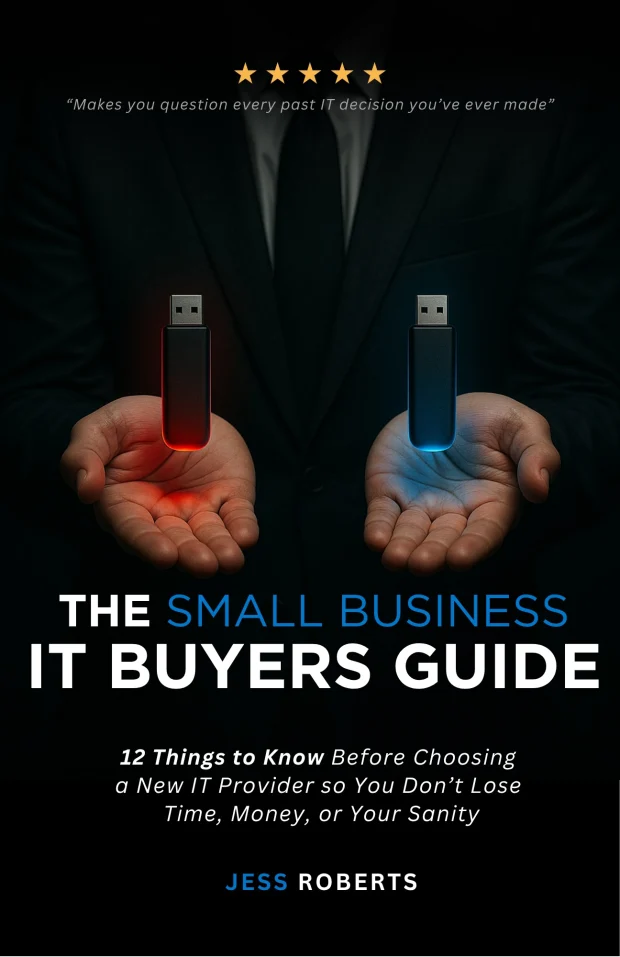
Download “The Small Business IT Buyers Guide”
Our free guide helps you understand what to look for in IT support, the fees involved, and how choosing the right partner can protect your business from data breaches, compliance risks, and unnecessary downtime.
Replace work-arounds with a tool built around the work
When the workflow lives between systems
- People copy information between applications and spreadsheets
- Exceptions are handled by memory rather than a clear path
- Reports require recurring exports and reconciliation
- Useful changes wait on someone else’s product roadmap
One workflow your team can follow
- Information moves where it is needed with fewer handoffs
- The normal path and its exceptions are visible to the team
- Useful reporting starts from the work already being done
- Future improvements can follow a business need
When off-the-shelf software almost fits
You've bought the tools. You're paying the subscriptions. But you're still running spreadsheets on the side, manually copying data between systems, and working around limitations instead of through them.
You're paying for features you don't use
Off-the-shelf software is built for everyone, which means it's optimized for no one. You're paying for a feature set designed for the average customer—half of which you'll never touch, and the other half doesn't quite match your workflow. You end up working around the software instead of the software working for you.
Manual double-entry between disconnected systems
Your practice management software doesn't talk to QuickBooks. Your CRM doesn't sync with your scheduling system. Patient forms live in one place, billing data in another, and reporting requires exporting three spreadsheets and manually reconciling them. Every disconnect is a time sink and an error waiting to happen.
Spreadsheets holding your operation together
You're running mission-critical processes in shared Excel files—inventory tracking, patient workflows, project management, billing reconciliation. It works until someone overwrites a formula, the file corrupts, or you need to scale. Spreadsheets are amazing tools; they're terrible databases and worse applications.
Stuck on a vendor's roadmap, not yours
SaaS tools evolve on their schedule, not yours. The feature you need has been "coming soon" for two years. The pricing tier you're on doesn't include the integration you actually need. You're paying monthly for software that's 80% of what you want and 0% flexible—and switching costs are too high to escape.
Software built for your workflow—not someone else's
We build custom software that eliminates friction: automations that remove manual work, integrations that connect disconnected systems, and internal tools that fit your workflow instead of forcing you to change how you operate.
Most businesses don't need a massive enterprise platform. They need targeted solutions that solve specific problems—automate patient intake forms and route them into Dentrix, sync scheduling data with billing so staff stop double-entering appointments, build a dashboard that pulls real-time data from three systems instead of exporting spreadsheets every Monday morning, or replace a mission-critical Excel file with a proper database and web interface before it corrupts.
We specialize in small-to-mid-sized projects for healthcare practices and service businesses: workflow automation tools, system integrations, internal dashboards, patient portals, and line-of-business applications. These aren't six-month enterprise software builds—most projects launch in 2-4 months from kickoff to go-live, and simple integrations can be live in weeks.
Every project starts with discovery: we map your current workflow, identify friction points, and design a solution that removes manual steps instead of adding complexity. You see wireframes and prototypes before we write production code. You get progress updates every week, not radio silence followed by a big reveal. And you own the code and documentation—no vendor lock-in, no proprietary platforms you can't escape.
Custom software isn't just for Fortune 500 companies. If you're spending hours a week on manual tasks that software should handle, paying for tools that don't fit, or duct-taping systems together with spreadsheets, custom development pays for itself faster than you think.
Eliminate manual double-entry and data sync
Connect your disconnected systems so data flows automatically. When a patient books an appointment, it updates your schedule, your billing system, and your reporting dashboard—no manual export-import cycles, no reconciliation spreadsheets.
Automate repetitive workflows
Stop doing the same 12 steps every time a form comes in or a new client onboards. Automation tools handle the repetitive parts so your team focuses on work that actually requires a human, not copying and pasting data between systems.
Build tools that evolve with your business
Unlike SaaS platforms that evolve on their roadmap, custom software follows your roadmap. Need a new feature? We add it. Integration changes? We update it. Your competitive advantage grows instead of waiting for a vendor's feature request queue.
Start with the work, not the software
A useful internal tool earns its place by taking pressure off a real workflow. We use the people doing the work to keep the build grounded.
Map the manual work
We look at the handoffs, duplicate entry, and exceptions that make a current process frustrating or fragile.
Sketch the better handoff
Wireframes and a shared plan make the intended workflow visible before the build gets far ahead of the team.
Build around feedback
Working pieces arrive for review while there is still room to adjust the tool to the way people actually use it.
Learn from real use
After the team starts using the tool, the next refinements come from practical feedback rather than assumptions.
Custom solutions for real business problems
Discover the work, build the tool, refine it together
Discovery & Scoping
We start by mapping your current workflow and identifying friction points. What's manual that should be automated? What systems don't talk to each other? You get wireframes, a project plan, and a fixed-price quote before we write a line of code. No surprises, no scope creep.
Build, Test & Iterate
We build a working prototype fast and get your feedback early—no months of silence followed by a big reveal. You see progress every week, request changes as we go, and test the software with real workflows before launch. Iterative development means you get what you actually need, not what we thought you needed.
Deploy, Train & Support
Final testing, deployment to your infrastructure (cloud or on-premise), and team training so everyone knows how to use the new tools. You get documentation, source code, and 30 days of post-launch support. After that, ongoing support and enhancement retainers are available—most clients keep us on monthly to add features and handle changes as their business evolves.
Common questions about custom software
When does it make sense to build custom software instead of buying off-the-shelf?
Build custom when off-the-shelf tools almost fit but force workarounds, when you're paying for features you don't use, when you need integration between disconnected systems, or when your competitive advantage depends on a unique workflow. If you're maintaining spreadsheets alongside paid software to bridge the gap, or if you're manually re-entering data between systems, custom software eliminates that friction and pays for itself in saved time.
How long does custom software development take?
Simple automations and integrations can launch in 2-4 weeks. Line-of-business applications typically take 2-4 months from discovery to go-live, depending on complexity and integration requirements. We start with a scoping session to understand your workflow, build a working prototype for feedback, iterate based on your input, then train your team and deploy. You see progress every week, not months of silence followed by a big reveal.
What if my needs change after the software is built?
We build software to evolve with your business. All custom applications include documentation and source code, so you're never locked in. We offer ongoing support and enhancement retainers—most clients keep us on a monthly plan for updates, new features, and integration changes as their business grows. Unlike SaaS tools that force you onto their roadmap, custom software follows your roadmap.
Can you integrate with our existing software and practice management systems?
Yes. We specialize in connecting disconnected systems—Dentrix to QuickBooks, patient forms to CRM, scheduling systems to billing platforms, spreadsheets to databases. Most modern software has an API or export capability we can work with. If your current tools don't talk to each other and you're manually copying data or running redundant processes, integration is often the highest-ROI project you can tackle.
Do you offer support and maintenance after the software is delivered?
Absolutely. Every custom software project includes 30 days of post-launch support for bug fixes and adjustments. After that, we offer monthly support and enhancement retainers that cover updates, new features, security patches, and integration changes as your business evolves. You get a dedicated communication channel and regular check-ins—if something breaks or you need a feature added, we're a message away, not a support ticket in a queue.
What does custom software development cost?
Cost depends on scope and complexity. Simple automations and integrations typically start around $3,000-$8,000. Line-of-business applications for workflow management, patient portals, or internal tools generally range from $15,000 to $50,000 depending on features, integrations, and user count. We start every project with a fixed-price scoping and design phase—you get a detailed project plan, wireframes, and a firm quote before committing to development. No surprises, no scope creep, no hourly billing uncertainty.