
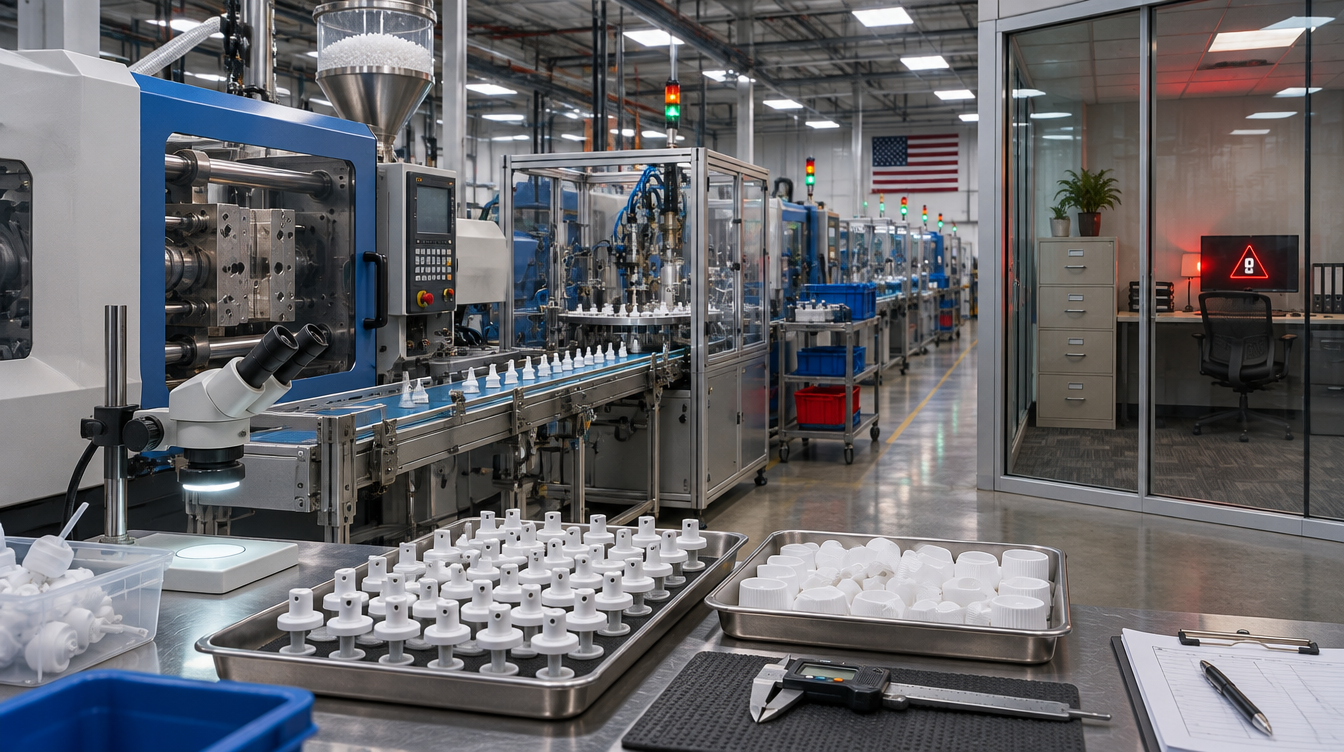
Clayton Corporation, a Fenton, Missouri manufacturer of aerosol valves, caps and dispensing systems, says an unauthorized third party had access to its computer systems for roughly three and a half months and accessed files that included current and former employee records. In a notice dated November 4, 2026, Clayton says the intruder was in its systems "between about May 27, 2026, and September 11, 2026," and that it discovered the access on September 8. Clayton is offering 24 months of credit monitoring and identity theft protection through IDX. For manufacturers and production shops, it is a reminder that the most sensitive files in the building are often in HR and payroll, not on the plant floor.
What Clayton has said
In the sample notice letter filed with the New Hampshire Attorney General, signed by Clayton's president, the company says: "On September 8, 2026, Clayton discovered that an unauthorized third party had gained access to Clayton's computer systems. Clayton subsequently determined that, between about May 27, 2026, and September 11, 2026, the unauthorized third party accessed files stored on those systems, including files containing employee and former employee records."
The letter says the information involved may have included name and contact information, "date of birth; Social Security number; driver's license number; bank account and routing numbers used for direct deposit; benefits information; information related to leave, accommodations, or workers' compensation; work related evaluations; and employment related tax information."
The cover letter from Clayton's outside counsel, dated November 4 and stamped received by New Hampshire on November 6, says the investigation "revealed that certain information may have been accessed and copied without authorization," that Clayton notified law enforcement, and that it "engaged third-party experts to assist in threat-hunting and securing its environment, reset account credentials, strengthened access controls and systems monitoring, and implemented additional security safeguards." That filing covers one New Hampshire resident. ClaimDepot reports that a sample letter was also posted by Massachusetts. Clayton has not published a total number of people affected.
The letter also tells recipients that "Clayton does not store passwords for personal online accounts," but recommends changing any password or security question reused from Clayton systems.
What we are not claiming: Clayton's letter does not say how the intruder got in, and we are not guessing. We are not saying any systems were encrypted, that a ransom was demanded or paid, that production or shipments were disrupted, or that anyone's information has been misused. We are not attributing this to any criminal group. The New Hampshire filing covers one resident; no total count has been published, and not every person had every type of information listed.
Why this matters to manufacturers
Most of the security attention in a plant goes to production: machine controllers, the ERP, the shipping schedule. But the files that trigger notice letters usually live somewhere quieter. Offer letters, I-9 copies, direct deposit forms, benefits enrollments, leave and workers' compensation paperwork, and performance reviews tend to collect on a shared drive or an HR folder that has not been cleaned out in years, and they cover former employees as well as current ones.
The other lesson is time. Clayton's dates put the start of the access more than three months before the discovery. A small or mid-sized manufacturer without someone watching logins and file activity around the clock can have an intruder browsing its file shares for weeks without anyone noticing, especially over a summer.
What to do this week
- Find where HR and payroll files actually live. Check shared drives, scanned-document folders, old file servers and personal desktops for I-9s, W-4s, direct deposit forms and benefits paperwork. Move them into one restricted location.
- Purge what you no longer need. Set a retention schedule for former-employee records and follow it. Files from people who left years ago still mean letters if they are taken.
- Limit who can open them. HR, payroll and leave records should be readable by the few people who need them, not by every office account or a shared "plant" login.
- Put multi-factor authentication on every remote way in. VPN, remote desktop, remote-support tools, email and the payroll or HR portal. Remove accounts for former staff and old vendors.
- Get alerts that a person reads. Endpoint protection or managed detection should flag new remote tools, logins at odd hours and large file copies, including on weekends and during shutdown weeks.
- Keep logs long enough to measure dwell time. If login and file-access logs only go back a few days, an investigation cannot show what was or wasn't touched over months.
- Write down the first-hour plan. Know who calls your cyber insurer, breach counsel and IT provider, who can reset credentials and cut remote access, and how you will notify current and former employees.
The takeaway for IT decision-makers
For a manufacturer, an intruder doesn't have to touch a single machine on the floor to cause months of cleanup. Know where your employee records live, shrink who can reach them, put MFA on every way in, and make sure someone would notice a stranger in your file shares in days rather than months. If you'd like help working through that list, Brotherly Technology can help.
Sources
- New Hampshire Attorney General: Clayton Corporation notice of data incident and sample letter (counsel letter dated Nov. 4, 2026, received Nov. 6, 2026; one New Hampshire resident; checked Nov. 19, 2026)
- ClaimDepot: Clayton Data Breach Exposes Employee Personal Information (reports Massachusetts and New Hampshire filings; Nov. 17, 2026)
- Clayton Corporation (company description and Fenton, Missouri address; checked Nov. 19, 2026)